Details
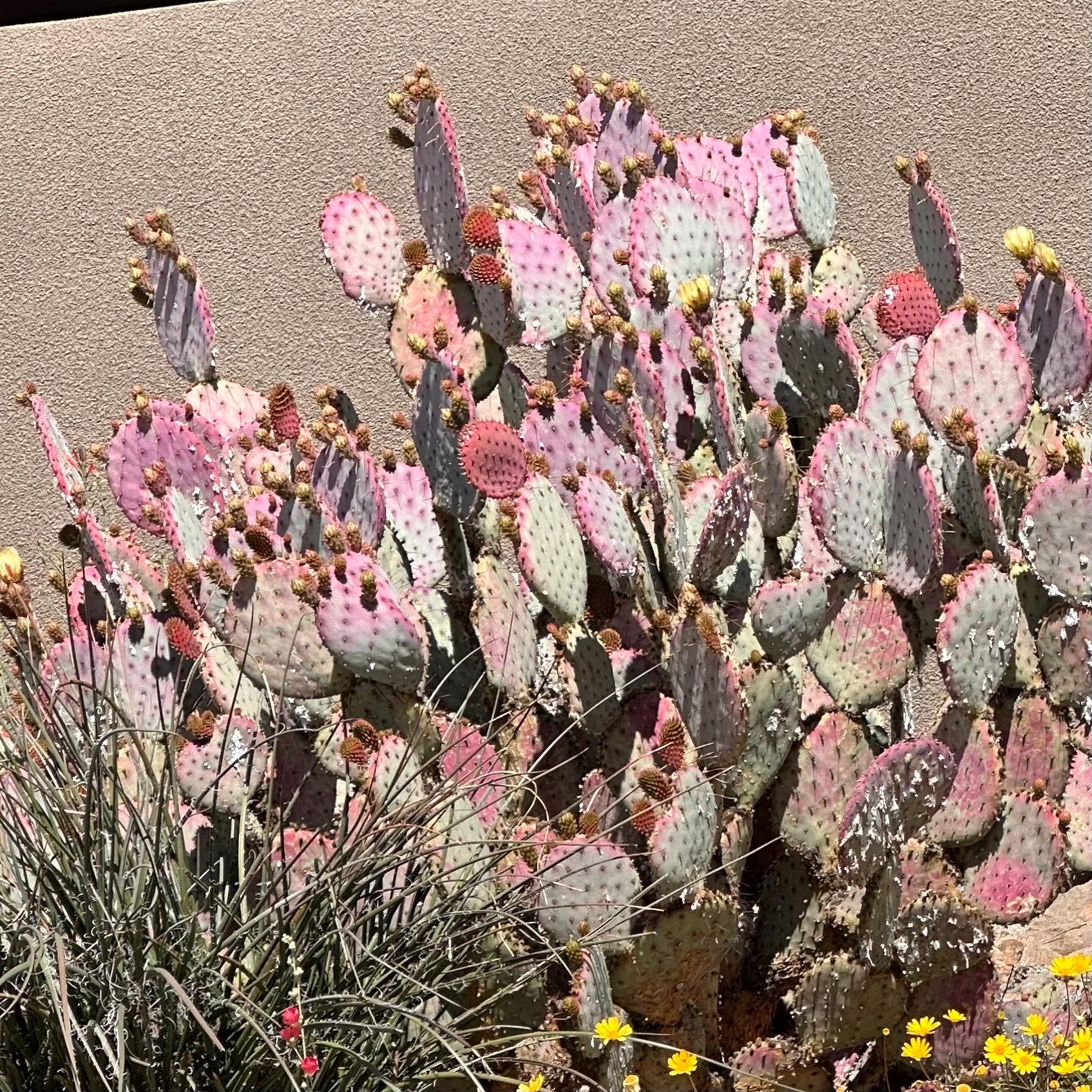
The Santa Rita purple prickly pear, scientifically known as Opuntia santa-rita, is a beautiful cactus native to the southwestern United States. It's distinguished by its vibrant purple-tinged pads, especially when exposed to cold temperatures or drought, which can also turn them a bluish-gray in warmer months. This cactus is a popular choice for xeriscaping and rock gardens due to its low water needs and tolerance for dry conditions.
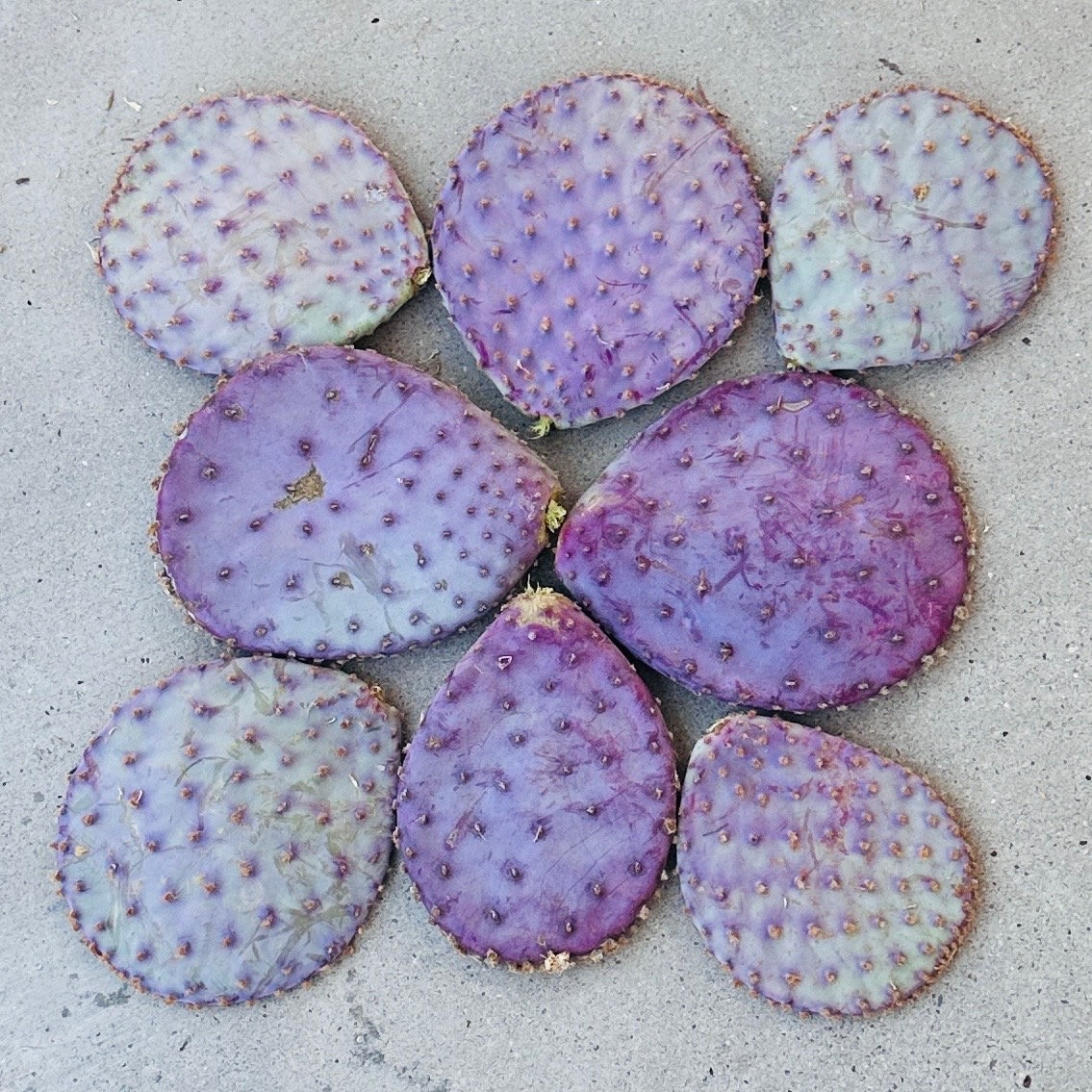
How to handle a prickly pear pads -
Use tongs to hold them while cleaning and planting them. Wear gloves and long sleeves while handling the cacti, because while they don’t have sharp spines, they may still have small glochids that can be a nuisance. (Glochids are tiny hair-like bristles that grow on the plant.)
How to plant the pads and care:
The prickly pear pads should be dried and callused over a few days and then placed in the ground or a pot of soil. Please place the pot into indirect or filtered sunlight for 4-6 weeks. Then water sparingly. The cactus prefers evenly moist soil in summer, but it is drought tolerant.
Appearance:
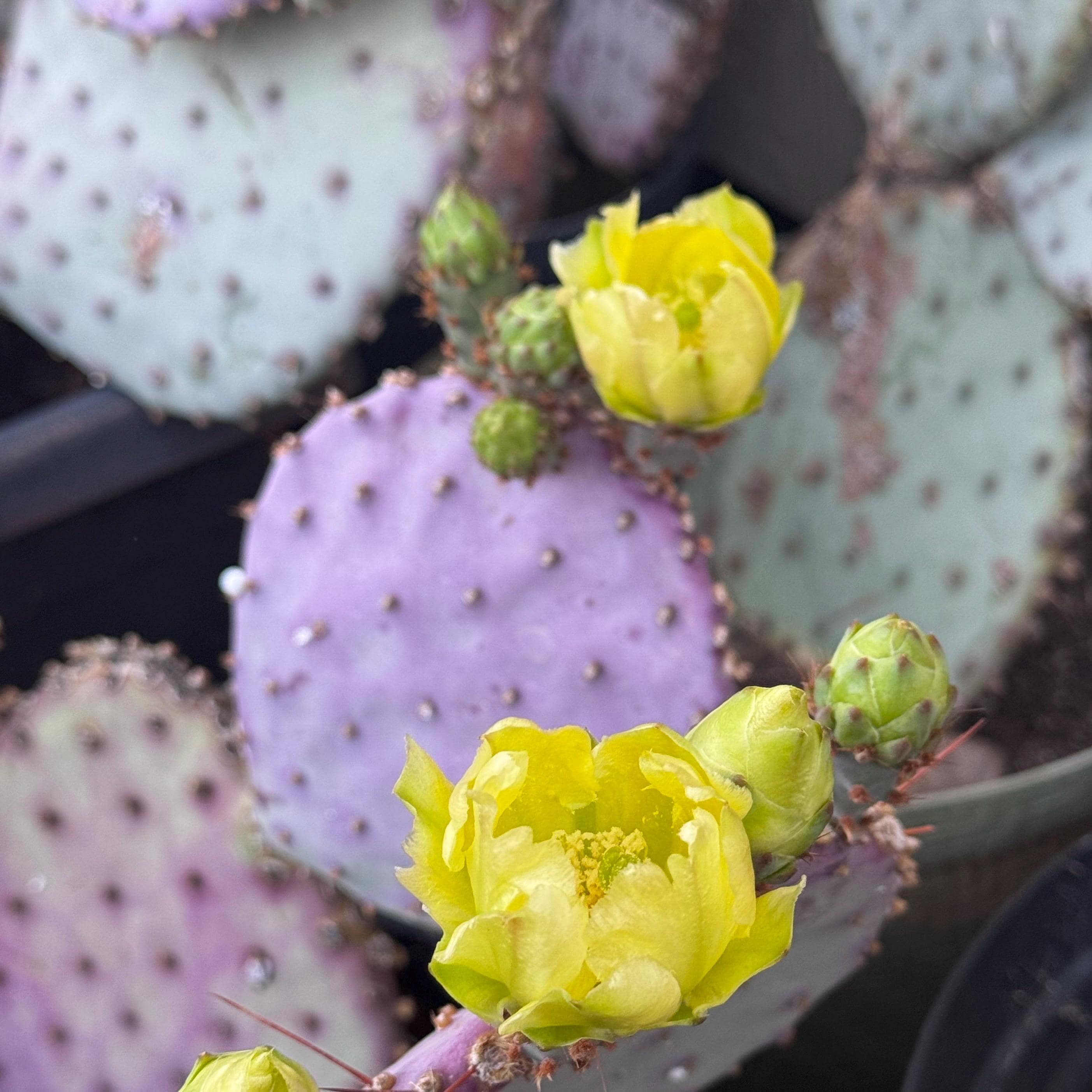
The cactus features flat, rounded pads (cladodes) that are typically bluish-green but turn a rich purple hue in cooler weather or during periods of drought.
Flowers and Fruit:
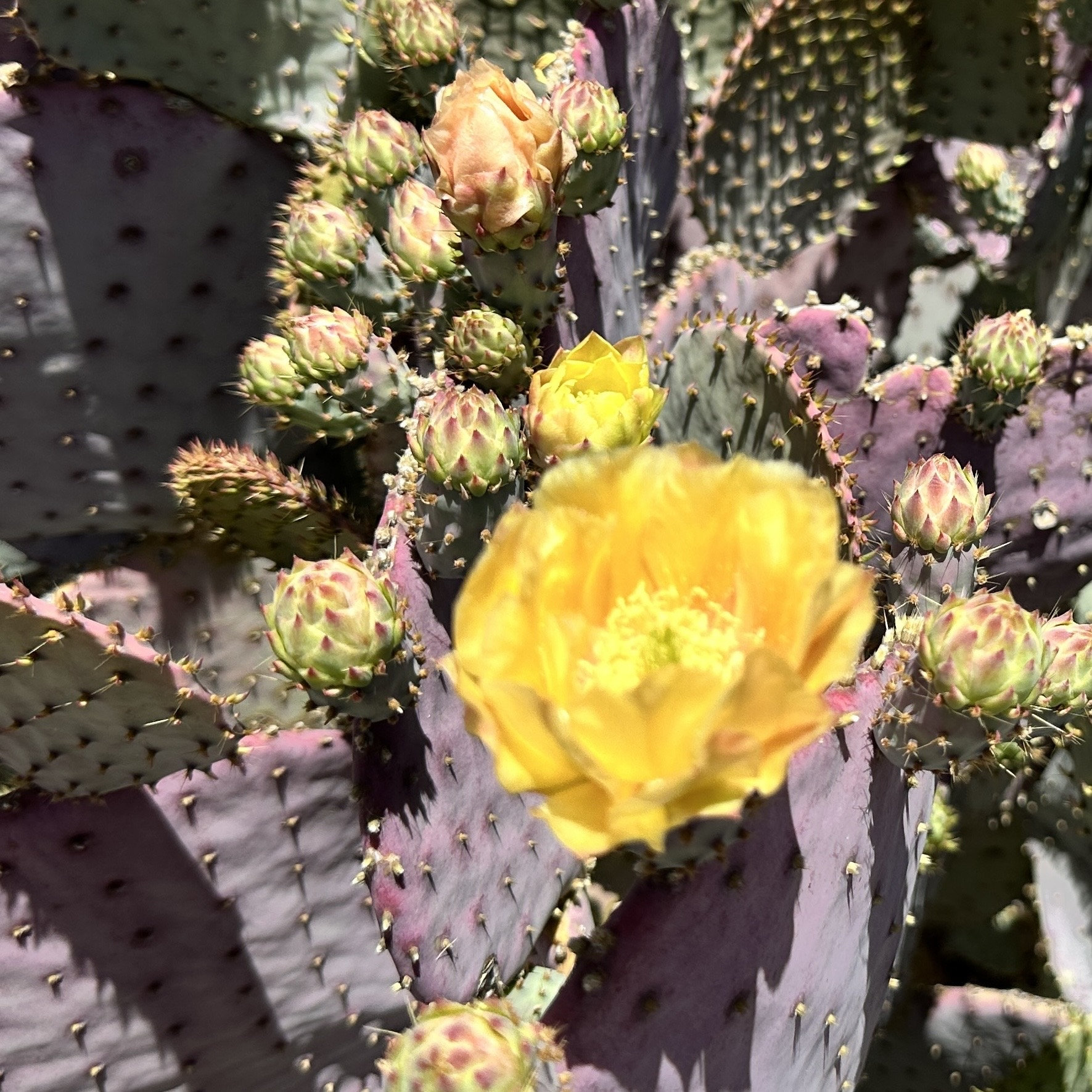
In the spring, it produces bright yellow flowers, followed by small, purple, edible fruits (tunas).
Growing Conditions:
Santa Rita prickly pear thrives in full sun and well-drained soil. It's highly drought-tolerant once established.
Hardiness:
It is frost-hardy, tolerating temperatures down to the mid-teens Fahrenheit (around -9°C).
Uses:
The pads (nopales) and fruits (tunas) are both edible and can be used in various culinary applications. The cactus is also valued for its ornamental appeal in gardens.
Native Range:
It is native to Arizona, New Mexico and Texas.